Raccoons, squirrels, and birds find chimneys irresistible for nesting — we remove them humanely, clean up the mess, and cap it so it doesn't happen again.
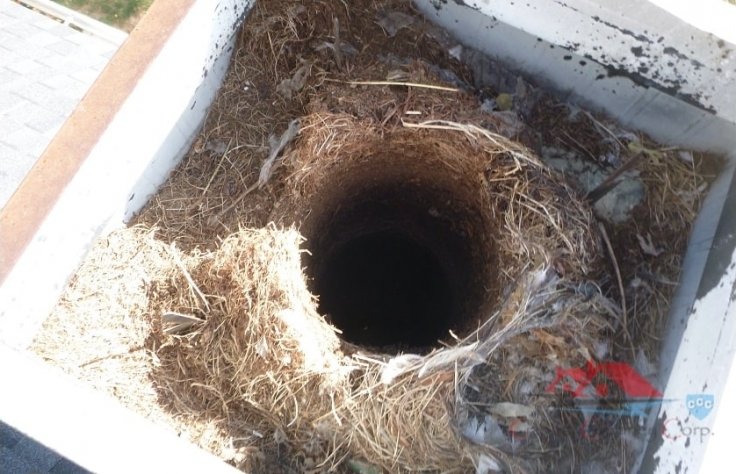
Confirming what's actually in the chimney before deciding on the safest removal method.
Animals removed without unnecessary harm, following applicable wildlife guidelines.
Debris removed, since old nests are both a fire hazard and a flue blockage risk.
Droppings and odor addressed as part of the job, not left behind for you to deal with.
The actual fix that keeps animals from getting back in after they're removed.
Recommended when significant nesting debris has built up throughout the flue.
Especially active at dawn or dusk, when most chimney-dwelling animals are most mobile.
Often chimney swifts or baby animals in a nest, particularly common in spring and summer.
A sign of animal waste building up somewhere inside the flue.
Leaves, twigs, or debris visible from the ground or when up on the roof.
The entry point that let the animal in in the first place, and the thing that needs fixing after.
The species involved and the cap work needed afterward drive the cost.
No service call fee, no obligation. Written quote before any work begins.
Different animals require different removal methods, timing, and sometimes permits.
More debris in the flue means more cleanup time before the job is done.
Animal removal often happens at height, adding complexity to the job.
Needed afterward to actually prevent the same problem from recurring.
Tell us what you're hearing or seeing.
We identify the animal and assess the situation.
Animal and nesting material removed safely and humanely.
New or repaired cap installed so it doesn't happen again.
It depends on the species, the extent of nesting material, and whether cap repair or replacement is needed afterward. We give a free on-site estimate with a written quote before any work begins.
Raccoons and squirrels are the most common, along with chimney swifts and other birds, especially during spring and summer nesting season. Bats occasionally roost in chimneys as well.
Some species, particularly certain birds, are protected during active nesting, which can affect the timing and method of removal. We'll explain what applies to your specific situation before doing any work.
Not if the entry point is properly capped afterward. Removing the animal without fixing the cap just invites the same problem, or a different animal, to move back in.
We don't recommend it. Working at height inside a flue carries real risk, some species can be aggressive when cornered, and improper handling can leave animals or young trapped inside. It's worth having it done safely and correctly the first time.
Yes. Removing the animal without cleaning up the mess it left behind doesn't solve the odor or fire-hazard problem, so cleanup is part of the job.
Roughly 40 miles out from Minneapolis and St. Paul.
Free on-site estimate, written quote, no obligation. Next-day scheduling across the Twin Cities metro.
No commitment · No service call fee · Same-day available