
Water rarely enters where the stain appears. We trace it to the actual source before repairing anything — free on-site diagnosis, no guessing.
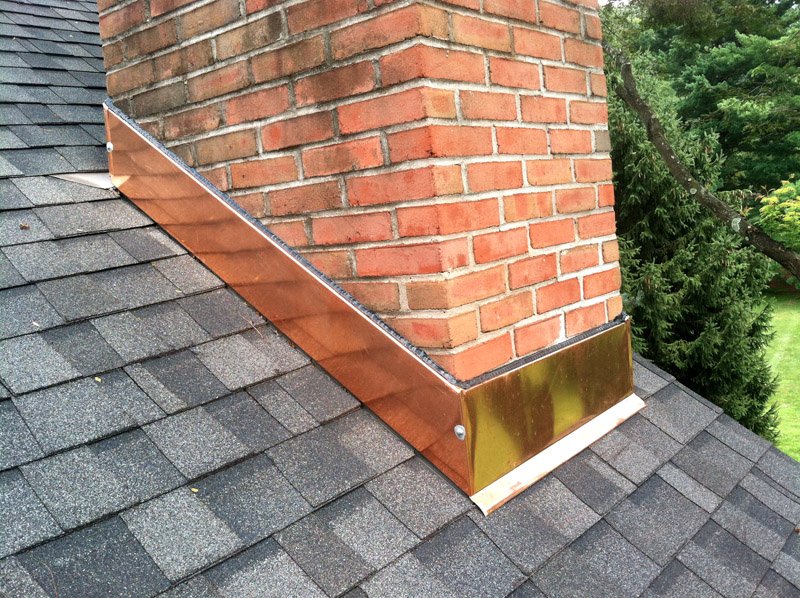
Most chimney leaks trace back to one of these six sources — rarely where the stain first shows up.
The flat cap on top of the chimney. Cracks let water straight into the structure below.
The metal seal where the chimney meets the roofline — one of the most common failure points.
Lets rain fall directly through the flue opening whenever it's missing or bent out of shape.
Masonry that's already absorbing water through a broken or flaking face.
Gaps between bricks that water can travel straight through once the mortar fails.
On factory-built chimneys, a rusted or ill-fitting cover lets water in around the flue pipe.
The most common way people first discover a chimney leak — often well after it started.
An odor that intensifies during or right after wet weather, even without a visible stain yet.
A slow drip landing on metal components over time, even if you've never seen active water.
Moisture moving through masonry or drywall, visible as white staining or bubbling paint.
Active water entry during heavy rain, usually the clearest sign something needs attention now.
A resealed crown and a full flashing replacement are both "leak repair" — priced very differently.
No service call fee, no obligation. We trace it before we quote anything.
A resealed crown costs far less than a full flashing or masonry replacement.
Prolonged leaks can mean hidden damage that extends beyond the visible source.
Steep rooflines add complexity to flashing and crown work.
Sometimes the repair needs to address damage beyond the entry point itself.
Tell us where you're seeing water, even if it seems random.
We trace the leak to its actual source, not just the visible symptom.
Fixed at the source — crown, flashing, cap, or masonry.
We confirm it's sealed and back it for three years in writing.
Intermittent leaks are usually tied to wind direction, rain intensity, or the angle of snowmelt. A small crack or gap might only let water through under specific weather conditions, which makes the leak seem random even though the source is consistent.
We inspect the crown, flashing, cap, and masonry systematically, since water travels before it shows up as a stain. In some cases we use a controlled water test to watch exactly where it enters, rather than guessing from the visible damage alone.
It depends entirely on the source. Sealing a crown crack costs far less than replacing flashing or rebuilding spalled masonry. We diagnose for free and give a written quote before any repair work begins.
Yes, if it goes unaddressed. Ongoing moisture inside framing or drywall near the chimney is exactly the kind of condition mold needs to take hold, which is another reason not to wait once you notice water.
Active water entry during a storm is worth prompt attention, especially if it's reaching electrical or framing components. Call rather than filling out a form if it's actively leaking and we'll prioritize you.
Sometimes, depending on the cause and your policy. We provide the documentation most insurers ask for — photos of the source, photos of the repair, and a detailed written quote — which is what you'll want in hand either way.
Roughly 40 miles out from Minneapolis and St. Paul.
Free diagnosis, written quote, no obligation. Next-day scheduling across the Twin Cities metro.
No commitment · No service call fee · Same-day available