
Creosote builds up in three stages, and the last one is genuine chimney fire fuel that a standard sweep can't always remove. We identify the stage and use the right method for it.
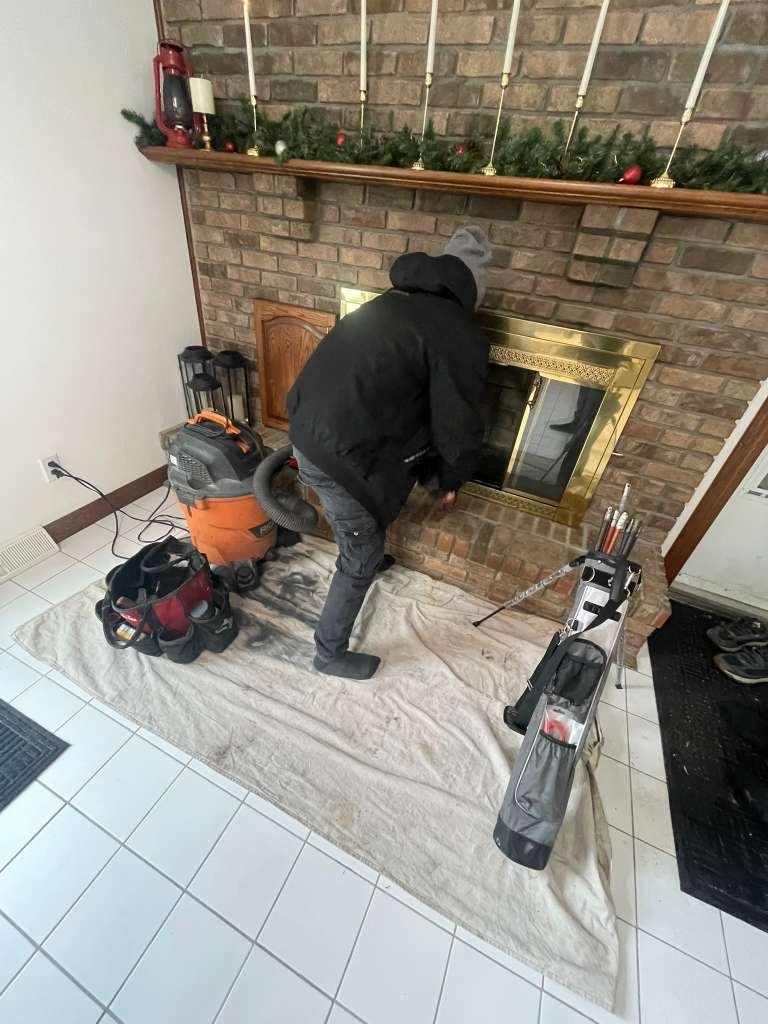
Identifying whether buildup is stage one, two, or the hardened glaze.
Sized rotary and hand brushes for typical soot and tar-stage buildup.
A creosote modifier applied to soften stage three buildup before mechanical removal.
Negative-pressure vacuuming keeps soot and debris out of your home.
Assessing whether creosote has caused any damage to the liner underneath.
Practical tips to slow future buildup, based on what we actually find.
The standard window for meaningful creosote buildup with regular burning.
Humid air makes the smell more noticeable than it is during the burning season.
Often a sign of glazed, hardened third-stage creosote in the flue.
Something a Level 1 inspection or routine sweep may reveal without you looking for it.
Both accelerate creosote buildup significantly compared to occasional, well-seasoned burns.
The stage of buildup determines both the method and the price.
Stage one or two creosote, handled with standard brush and vacuum methods.
Stage three buildup needs its own quote — extent and method vary case by case.
If creosote has damaged the liner underneath, quoting the fix costs nothing.
Glazed third-stage creosote sometimes can't be fully removed in a single visit, and in more extreme cases mechanical and chemical methods together still can't fully clear it — which is one more reason not to let buildup get to that stage in the first place.
Tell us how long it's been since your last sweep.
We identify the creosote stage before recommending a method.
Brushed, chemically treated, or both, depending on the stage.
We show you the result and discuss habits to slow future buildup.
Stage one is light, flaky soot, easily brushed away. Stage two is a thicker, tar-like layer that takes more work. Stage three is a hard, glazed coating that's essentially fuel waiting for a chimney fire, and it's the hardest to remove.
Glazed third-stage creosote is highly combustible and burns extremely hot when it ignites, which is how chimney fires start. It's also difficult to remove with standard brushes alone, so it tends to accumulate further if left unaddressed.
Usually, yes, with a combination of chemical modifiers and mechanical work, though it sometimes takes more than one visit. In rare, severe cases, a liner replacement may be a more practical long-term solution than repeated aggressive cleaning.
Standard stage one or two removal starts at $149, similar to a routine sweep. Glazed stage three buildup needs a free on-site assessment since the extent and method required vary significantly case by case.
Burning unseasoned or wet wood, restricted airflow, and frequent low, smoldering fires all accelerate creosote formation compared to hot, efficient burns with properly seasoned wood.
They overlap significantly — creosote removal is the main purpose of most sweeps. The distinction matters mainly when buildup has reached the glazed stage, since that requires a different approach than a routine annual sweep.
Roughly 40 miles out from Minneapolis and St. Paul.
We'll tell you honestly during the visit. Next-day scheduling across the Twin Cities metro.
No commitment · No service call fee · Same-day available