
The metal seal where your chimney meets the roofline is one of the most common leak sources in the entire system — we repair or replace it correctly the first time.
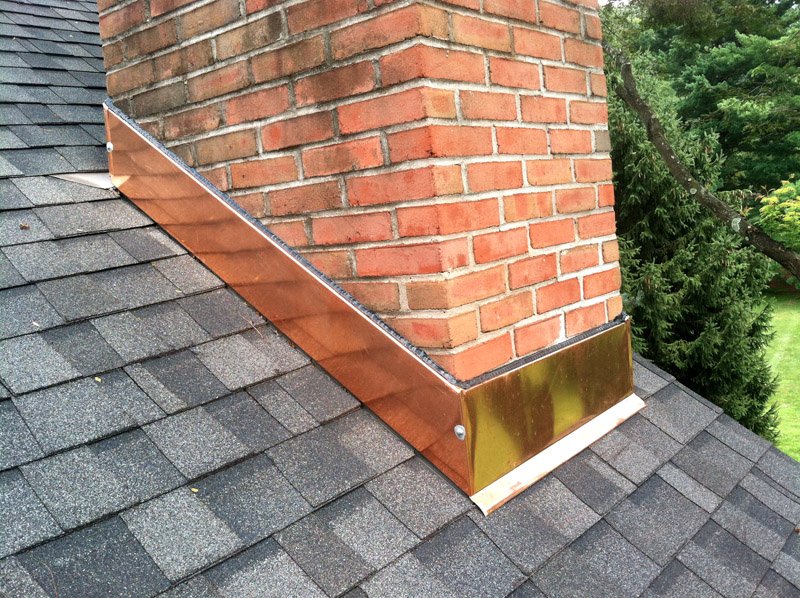
Checking step flashing, counter flashing, and sealant for gaps or corrosion.
Individual pieces resealed or replaced where they've pulled away or rusted through.
The top layer that tucks into the masonry, resealed or rebuilt when it's failed.
A small ridge built behind wide chimneys to divert water around them properly.
Flexible, weather-rated sealant applied at every seam and transition point.
Flashing work coordinated with your existing shingle or roofing type.
Flashing failure is one of the most common leak sources anywhere on the chimney system.
Corrosion or separation where the flashing meets the chimney or roof deck.
Dried, cracked sealant at the flashing seams no longer blocks water the way it should.
Chimneys over roughly 30 inches wide need a cricket behind them to shed water properly.
New shingles installed around old, unaddressed flashing is a common source of new leaks.
Roofing material and chimney width affect the job more than the flashing itself.
No service call fee, no obligation. Written quote before any work begins.
Resealing a section costs far less than a full flashing replacement.
Wider chimneys may need a cricket, which adds material and labor.
Asphalt shingle, metal, and tile roofs each require different flashing techniques.
Steep rooflines add complexity and safety requirements to the job.
Tell us what you're seeing — a stain, rust, or a recent roof job.
We inspect the flashing and give you a written quote.
Resealed, repaired, or replaced, matched to your roofing material.
We confirm it's watertight and back it for three years in writing.
It depends on the extent of the repair, chimney width, and roofing material. We give a free on-site estimate with a written quote before any work begins.
Step flashing is a series of overlapping metal pieces woven into the roof shingles along the chimney's sides. Counter flashing is the top layer that tucks into the masonry and covers the step flashing, directing water down and away from the joint. Both need to work together to actually seal properly.
Often, yes, especially for counter flashing work at the masonry side. Step flashing repairs sometimes require lifting nearby shingles, which we handle carefully to avoid creating a new leak point.
Because flashing is chimney work, not roofing work, and it's sometimes skipped or reused during a roof replacement. Old, failing flashing left in place under new shingles is a common source of leaks that show up right after a roof job.
A cricket is a small peaked ridge built behind a chimney to divert water and snow around it instead of letting it pool against the uphill side. Chimneys wider than about 30 inches typically need one, especially on steeper roofs.
Quality flashing installed correctly can last 20 to 30 years, similar to a roof's lifespan. Sealant at the seams typically needs attention sooner, often within 5 to 10 years depending on weather exposure.
Roughly 40 miles out from Minneapolis and St. Paul.
Free on-site estimate, written quote, no obligation. Next-day scheduling across the Twin Cities metro.
No commitment · No service call fee · Same-day available